Operational Due Diligence Best Practices for AIF Managers
Published on 11/7/2025
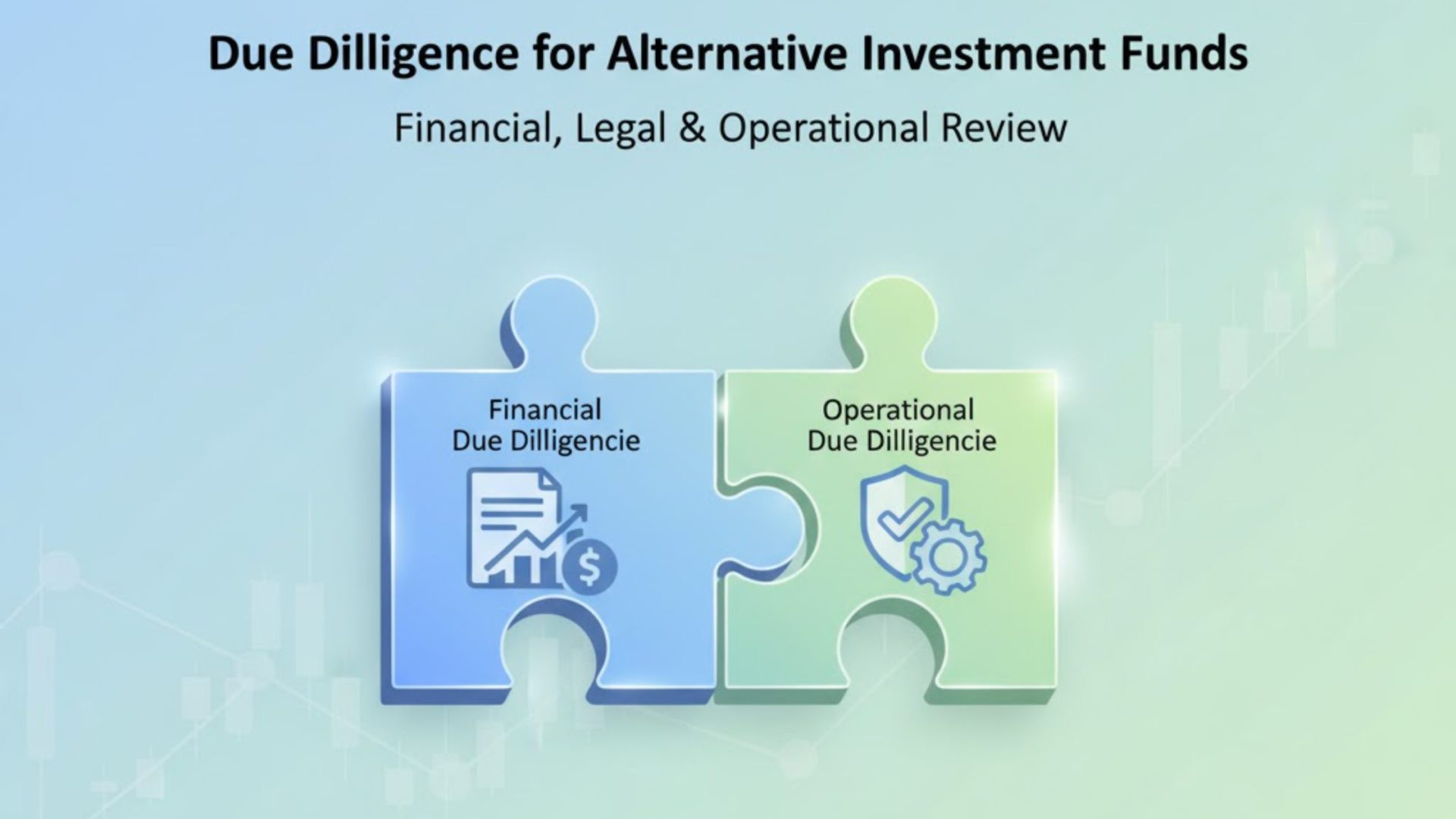
Alternative Investment Funds (AIFs) are rapidly transforming the investment ecosystem in India by enabling exposure to complex asset classes such as private equity, venture capital, unlisted securities, distressed assets, and real estate investments. Unlike traditional mutual funds, AIFs operate in a high-risk, high-reward environment where investment structures are more sophisticated and require deeper evaluation.
In this landscape, Operational Due Diligence for AIF managers plays a critical role in ensuring informed and secure investment decisions. It involves a comprehensive assessment of internal processes, governance frameworks, compliance standards, and operational risks—ensuring that every investment is backed by verified data, regulatory alignment, and risk transparency.
To strengthen this process, advisory partners offering expertise in fund administration, accounting oversight, regulatory compliance, and investor relations support become essential. Their involvement enables AIF managers to conduct structured due diligence, minimize operational risks, enhance transparency, and improve overall investment decision-making for both fund managers and investors.
1. What is Due Diligence in the Context of AIFs?
Due diligence refers to the systematic evaluation of a target company, asset, or investment opportunity. The goal is to confirm the authenticity of claims, identify risks, and determine whether the investment aligns with the fund’s mandate and expectations.
For AIFs, due diligence extends beyond the financials:
- It verifies legal standing and regulatory compliance.
- It assesses the stability, scalability, and quality of management.
- It evaluates operational reliability and market sustainability.
Ultimately, due diligence protects investor capital and enhances transparency throughout the fund lifecycle.
2. Key Areas of Due Diligence for AIFs
2.1 Financial & Accounting Review
A thorough financial evaluation helps determine the true health of the target. This includes:
- Examination of audited financial statements
- Quality of earnings and recurring revenue sustainability
- Working capital trends and liquidity position
- Debt obligations and repayment capability
- Validity of valuation assumptions
Professional fund administrators support AIFs by ensuring accurate accounting, transparent NAV reporting, and consistent reporting frameworks—essential for investor confidence.
2.2 Regulatory & Compliance Examination
AIF investments must align with sector-specific regulations and broader compliance obligations. Key considerations include:
- SEBI regulations and fund category rules
- Anti-money laundering (AML) and KYC practices
- Licensing and statutory registrations
- Periodic investor disclosures and compliance filings
A structured compliance framework shields the fund from regulatory penalties and operational disruptions.
2.3 Operational & Business Model Assessment
This part focuses on how the business actually functions and plays an important role in the operational risk assessment for funds evaluating potential investment opportunities:
- Governance structure and decision-making processes
- Core operational workflows and efficiency
- Supply chain dependencies and vendor risk
- Technology architecture and cybersecurity safeguards
- Key managerial talent and workforce capability
Operational advisory or CFO/COO support can help identify gaps, strengthen internal controls, and improve the overall operational risk assessment for funds, ensuring that investment decisions are supported by reliable operational insights.
2.4 Legal & Contractual Due Diligence
Legal clarity avoids future disputes. Reviews include:
- Verification of ownership and shareholder rights
- Intellectual property and licensing agreements
- Active or potential litigations
- Commercial contracts, warranties, liabilities, and indemnities
The structure of the deal—whether asset acquisition or equity purchase—carries different implications for the fund.
2.5 People & Leadership Due Diligence
A strong business can fail under weak leadership. Evaluation should include:
- Founders’ integrity and background checks
- Succession planning and management stability
- Incentive structures and governance ethics
2.6 Market & ESG Assessment
Understanding the competitive landscape and market forces is essential. Additionally, Environmental, Social, and Governance (ESG) considerations are becoming integral to institutional and global investors.
3. The Due Diligence Process: Step-by-Step
- Scoping & Planning – Define investment objective, key questions, and scope.
- Data Room Setup – Collect financials, legal documents, compliance records, and business information.
- Interviews & Site Visits – Validate information directly from management and operations teams.
- Analysis & Risk Assessment – Identify financial, operational, legal, or strategic risks.
- Reporting – Prepare findings and recommendations to support investment decision-making.
- Post-Investment Monitoring – Ensure assumptions remain valid and performance is tracked transparently.
4. Common Pitfalls to Avoid
- Trusting historical performance without forward-looking stress tests
- Underestimating contingent liabilities or off-balance sheet exposures
- Overlooking governance weaknesses or key-person-dependency
- Ignoring compliance gaps or sector-specific regulatory restrictions
Experienced advisory support helps detect and mitigate these risks early.
5. Value Addition Through Professional Advisory Support
A comprehensive advisory partner helps AIFs by:
- Handling fund accounting and NAV reporting for accuracy and audit-readiness
- Ensuring structured compliance and timely regulatory filings
- Providing operational and CFO-level advisory for smooth fund operation
- Strengthening investor communication and post-investment monitoring
This integrated approach allows fund managers to focus on core investment strategy while ensuring operational integrity.
6. Quick Checklist Before Finalizing an AIF Deal
| Area | Documents / Checks |
|---|---|
| Financial | 3-year financials, cash flow statements, valuation reports |
| Legal | Contracts, IP ownership, litigation records, shareholding structure |
| Compliance | Regulatory approvals, licenses, KYC/AML records |
| Operational | Business process documentation, vendor agreements, and MIS systems |
| People | Leadership background, key personnel dependency, and governance culture |
Key Takeaways
In a rapidly evolving investment environment, thorough and structured due diligence has become a critical pillar of smart decision-making. As Alternative Investment Funds expand across diverse asset classes and emerging opportunities in India, a disciplined evaluation process ensures transparency, protects investor capital, and strengthens fund credibility.
By assessing financial health, legal compliance, operational efficiency, leadership strength, and market positioning, AIFs can minimize risks and unlock sustainable long-term value. Experienced advisory partners further enhance this process by offering seamless fund administration, regulatory support, and strategic guidance — helping fund managers stay focused on value creation.
With the right due diligence framework and expert support, AIFs can operate confidently, build resilient portfolios, and deliver consistent returns in a competitive investment landscape.
Looking for Expert Support for Your AIF?
We at Inspirigence Advisors have proven expertise in Fund Accounting and Fund Administration Services, Regulatory Compliance, Accounting Services, CFO/COO functions, Investor Relations, and Advisory for Private Equity funds, Hedge Funds, corporates, and other business entities.
👉 Partner with us to strengthen due diligence, ensure regulatory excellence, streamline fund operations, and build investor confidence.
📩 Get in touch today to discuss how we can support your fund’s growth and compliance journey.
Frequently Asked Questions (FAQs)
1. Why is due diligence important for Alternative Investment Funds in India?
Due diligence helps Alternative Investment Funds verify financial health, legal compliance, operational stability, and management credibility before investing. A structured due diligence process reduces investment risk, protects investor capital, and ensures that opportunities align with the fund’s strategy and regulatory requirements.
2. What does Operational Due Diligence include in AIF investments?
Operational Due Diligence evaluates a company’s internal processes, governance framework, technology systems, supply chain reliability, and management capabilities. It helps AIF managers assess whether the business can operate efficiently, manage risks effectively, and sustain long-term growth after the investment.
3. How does regulatory due diligence help AIFs?
Regulatory due diligence ensures that investments comply with SEBI regulations, sector-specific laws, AML/KYC requirements, and statutory filing obligations. This process helps AIFs avoid legal risks, maintain transparency, and protect the fund from penalties or regulatory violations.
4. What role do advisory partners play in AIF due diligence?
Advisory partners assist AIFs with fund accounting, NAV reporting, compliance oversight, operational reviews, and investor reporting. Their expertise helps fund managers conduct thorough due diligence, strengthen governance, and make more informed investment decisions.
5. What is the difference between financial due diligence and operational due diligence?
Financial due diligence focuses on analyzing financial statements, revenue quality, cash flow stability, and valuation assumptions. Operational due diligence evaluates business processes, governance structures, technology systems, and operational efficiency to determine whether a company can sustain growth and manage operational risks.
6. When should AIF managers conduct operational due diligence?
AIF managers should conduct operational due diligence before making an investment and continue monitoring operations after the investment. Early evaluation helps identify operational risks, governance gaps, and scalability challenges that could affect long-term investment performance.
7. What documents are reviewed during AIF due diligence?
Common documents reviewed during AIF due diligence include financial statements, shareholder agreements, regulatory registrations, vendor contracts, compliance records, intellectual property documents, and management reports. These documents help fund managers evaluate financial stability, legal standing, and operational reliability.
8. How does operational due diligence improve investor confidence?
Operational due diligence strengthens investor confidence by ensuring that investments are evaluated for operational risks, governance standards, and regulatory compliance. A transparent and structured review process reassures investors that their capital is being managed responsibly.
Recent Posts

Due Diligence for NBFCs in India: Process, Checklist and Red Flags
Published on 10/8/2026

Investment Banking Advisory for Healthcare and Pharma Companies
Published on 10/5/2026

Investment Banking Advisory for NBFCs and Fintech Companies
Published on 10/5/2026

Due Diligence for Venture Capital Funds: Process and Checklist
Published on 10/5/2026

Due Diligence for Private Equity Firms in India: Process, Types and Checklist
Published on 10/5/2026

How to Find the Right Investment Banking Advisor in India: 7 Things to Check Before You Hire
Published on 9/15/2026