Fund Due Diligence in India: The Complete Guide for AIFs, PE, VC & M&A
Published on 11/15/2025
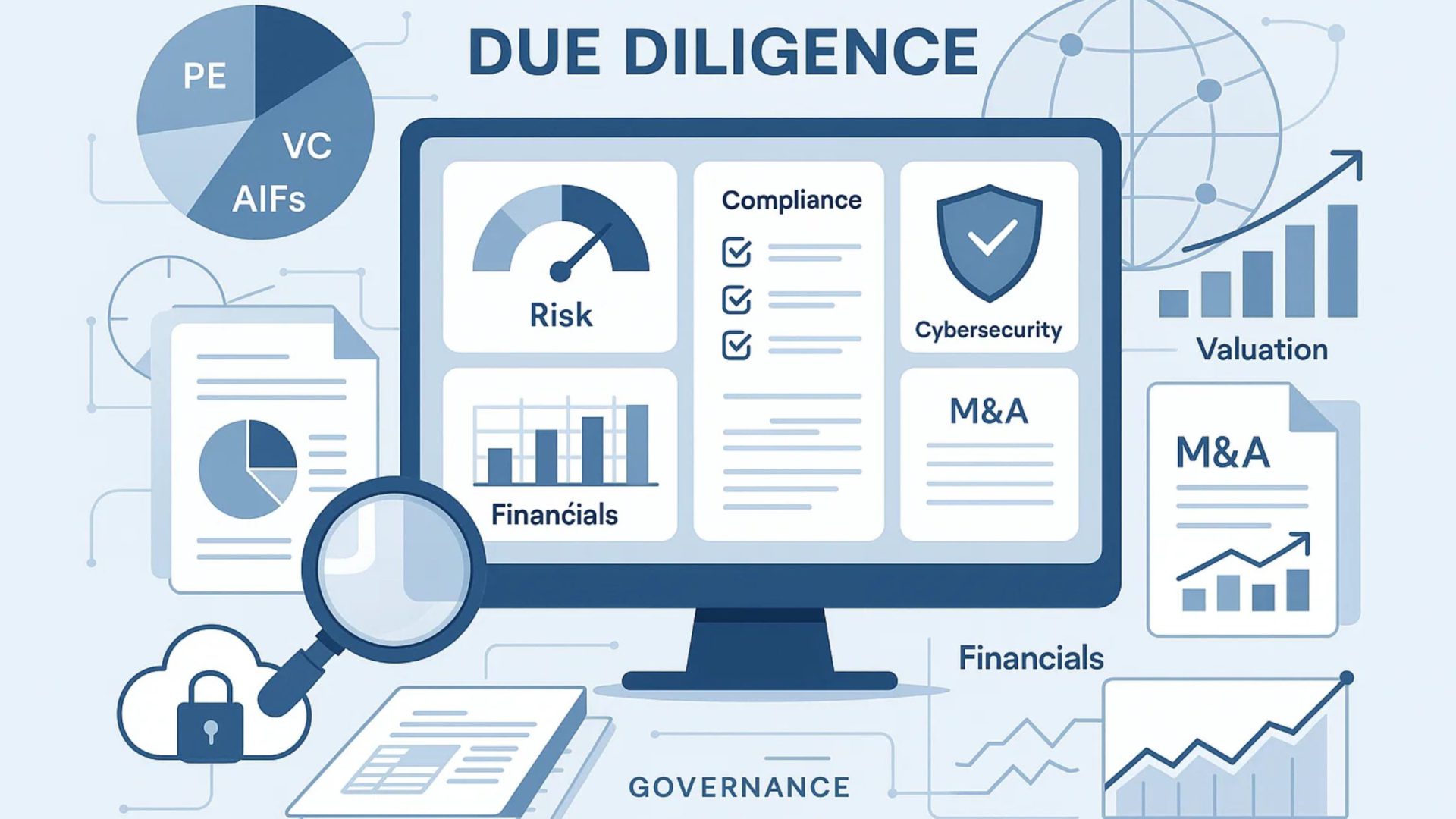
Fund Due Diligence in India: Institutional Overview by Inspirigence Advisors LLP, Mumbai
By Inspirigence Advisors LLP | Mumbai
Fund due diligence is the structured process of evaluating a fund’s financial health, governance, operations, and regulatory compliance before — and after — deploying capital. In India, it is governed by SEBI’s AIF regulations and covers financial, operational, legal, tax, forensic, cybersecurity, and ESG dimensions.
What Is Fund Due Diligence? (And Why It Matters in 2026)
Fund due diligence is the full-spectrum institutional process through which investors validate that capital will be managed with discipline, transparency, and accountability. It applies across Alternative Investment Funds (AIFs), Private Equity (PE) funds, Venture Capital (VC) funds, hedge funds, family offices, and M&A transactions.
India’s PE/VC industry has deployed over $60 billion in recent deal cycles — yet 30–40% of deals underperform, primarily due to inadequate pre-investment diligence and weak post-investment governance (IVCA/Bain India PE Report).
As of March 2026, SEBI-registered AIFs hold commitments exceeding ₹11 lakh crore across 1,200+ registered funds. SEBI’s 2024–25 amendments — covering independent valuation, expense transparency, AML/KYC tightening, and cybersecurity governance — have made institutional-grade due diligence a regulatory requirement, not an optional upgrade.
The bottom line: Funds that embed continuous due diligence attract institutional capital faster, maintain stronger LP relationships, and consistently outperform peers that treat diligence as a box-ticking exercise.
Table of Contents
- Financial Due Diligence
- Operational Due Diligence
- PE, VC & AIF Due Diligence
- Tax Due Diligence
- Forensic Due Diligence
- Technology & Cybersecurity Due Diligence
- ESG Due Diligence
- SEBI & Regulatory Compliance
- LP Due Diligence Expectations
- Cross-Border & M&A Due Diligence
- Post-Investment Monitoring
- Master Due Diligence Checklist
- Red Flags Every Investor Must Know
- FAQs
1. Financial Due Diligence: The Foundation of Every Deal {#financial}
Financial due diligence (FDD) goes far beyond reviewing audited statements. Its purpose is to determine whether reported profitability is real, sustainable, and achievable post-investment.
Quality of Earnings (QoE) — Non-Negotiable
A QoE report is the cornerstone of any rigorous FDD process. It identifies:
- One-time items artificially inflate EBITDA (insurance settlements, non-recurring contracts)
- Revenue recognition manipulation — multi-year contracts booked as single-period income
- Related-party revenue that won’t survive arm’s-length scrutiny post-acquisition
- Normalizing adjustments for management compensation and discretionary expenses
Working capital and cash flow diligence reveals whether a business is structurally cash-generative or cash-consuming — examining receivables aging, inventory obsolescence, payables terms, and cash conversion cycle vs. industry benchmarks.
Forecast stress-testing challenges management projections against historical actuals across base, optimistic, and adverse scenarios.
2. Operational Due Diligence: Institutionalizing the Investment Engine {#operational}
Operational due diligence (ODD) is the defining pillar of fund credibility. A fund without strong operational governance risks financial misreporting, cash leakage, regulatory penalties, and LP trust erosion — regardless of how compelling the investment thesis appears.
What institutional ODD evaluates:
- Organizational independence — Can the fund operate without key-person dependency? Institutional investors examine RACI matrices, policy manuals, and conflict-of-interest protocols.
- Process formalization — Are investment processes documented, repeatable, and auditable? Manual spreadsheets and email-only approvals are serious red flags.
- Investment committee discipline — Are IC decisions documented with voting records and dissenting views?
- Third-party independence — Do administrators, custodians, auditors, and valuers operate with genuine independence from the fund manager?
- Vendor controls — Do outsourced service providers (legal counsel, fund accountants, cybersecurity firms) meet institutional security and compliance standards?
The practical implication: funds that cannot pass institutional ODD cannot attract institutional capital.
3. PE, VC & AIF Due Diligence: Sector-Specific Framework {#sector}
Private Equity Due Diligence
PE due diligence requires forensic-level rigor because mature businesses frequently carry hidden liabilities invisible on audited statements:
- Undisclosed related-party transactions distorting profitability
- Off-balance-sheet debt through subsidiary structures or guarantee obligations
- Revenue recognition timing manipulation, inflating reported earnings
- Cultural and governance deterioration not visible in financial data
A complete PE diligence framework must include an integration readiness assessment — post-acquisition integration failures are a leading cause of deal value destruction.
Venture Capital Due Diligence
VC diligence shifts focus from financial history (limited in early-stage) to behavioral, technical, and market validation:
- Cap table hygiene — ESOP structures, convertible note terms, anti-dilution provisions, undisclosed side agreements
- Unit economics — burn multiple, net revenue retention, CAC, payback period, gross margin trajectory
- Technology architecture — IP ownership, technical debt, third-party dependency
- Customer references — direct conversations with 3–5 paying customers
- Founder verification — career history, credentials, litigation history, reference checks
AIF Due Diligence (India-Specific)
Category I, II, and III AIFs face distinct SEBI compliance profiles requiring specialist advisory:
- Independent valuation by SEBI-registered valuers
- Expense allocation controls within prescribed limits
- AML/KYC and UBO reporting under PMLA and FATF standards
- Side-letter governance and fair investor treatment
- Cybersecurity frameworks aligned with SEBI guidelines
4. Tax Due Diligence: Avoiding Costly Post-Closing Surprises {#tax}
Tax diligence is consistently underestimated — yet represents one of the highest-probability sources of post-closing financial surprises in India’s M&A and fund investment transactions.
Direct tax coverage:
- Income tax assessment history and pending disputes
- Section 14A, 40(a) disallowances and MAT/AMT positions
- LTCG/STCG characterization risks, dividend withholding compliance
GST and indirect tax:
- Filing compliance, ITC reconciliation, and pending litigations
- Reconciliation between GST returns and income tax filings
- E-invoicing compliance and digital documentation
Transfer pricing (cross-border):
- Permanent establishment risks for Mauritius/Singapore-routed structures
- Arm’s-length pricing for intercompany transactions
- Treaty benefit eligibility under post-BEPS frameworks
Tax diligence findings are the most common trigger for deal price adjustments and restructuring in Indian M&A transactions.
5. Forensic Due Diligence: Detecting Fraud Before It Costs You {#forensic}
Forensic due diligence applies investigative techniques to detect manipulation, fraud, and structural misrepresentation that standard audit processes are specifically designed to miss.
What forensic DD uncovers in India:
- Inflated revenue through circular transactions between related entities
- Shell vendor ecosystems — payments flowing out via fictitious suppliers
- GST registration mismatches between billing entities and reported revenue
- Duplicate invoicing across financial periods
- Promoter lifestyle analysis inconsistent with declared income
- Bank statement forensics, identifying unaccounted cash withdrawals or informal borrowings
- Litigation history beyond standard court databases (district courts, arbitration, regulatory)
When forensic DD is essential: AIF Category II and III managers evaluating target companies; PE funds pursuing control buyouts in hospitality, healthcare, construction, and real estate; any M&A transaction where management has prior associations with regulatory investigations.
6. Technology, Cybersecurity & AI Risk Due Diligence {#tech}
Technology diligence has evolved from an optional add-on to a core institutional requirement — particularly for fintech, SaaS, healthtech, and AI-native businesses.
Cybersecurity due diligence covers:
- Access control architecture (MFA, privileged access, role-based controls)
- Encryption standards (data-at-rest and in-transit)
- Penetration testing (VAPT) outcomes and remediation evidence
- Incident response readiness and ransomware recovery procedures
- Vendor security posture for critical service providers
- Compliance certifications: SOC 2 Type II, ISO 27001, RBI/IRDAI sector guidelines
AI and data integrity diligence:
- IP and training data ownership, licensing risks
- Model explainability for regulated applications (credit, healthcare, insurance)
- Algorithmic bias testing — demographic and socioeconomic fairness
- Deepfake and AI-generated document fraud vulnerability
- DPDP Act compliance for data governance and retention
7. ESG & Sustainability Due Diligence {#esg}
ESG diligence has moved from a reporting exercise to a genuine investment value driver. Global LPs — European pension funds, endowments, and impact investors — increasingly require ESG assessment as a precondition for fund commitment.
Core dimensions:
- Environmental: Carbon footprint, climate risk in supply chains, India net-zero alignment, BRSR compliance
- Social: Workforce diversity, fair labor practices (especially manufacturing/supply chain), health and safety
- Governance: Board independence, related-party controls, executive compensation, whistleblower mechanisms, anti-bribery frameworks
Greenwashing risk: SEBI’s BRSR framework — mandatory for listed companies, increasingly adopted for unlisted entities — requires structured, evidence-backed disclosures. ESG self-declarations without independent verification expose LPs to reputational liability.
8. SEBI & Regulatory Due Diligence — 2024–25 Focus Areas {#sebi}
SEBI’s evolving AIF framework has introduced specific requirements that must be embedded in every fund governance and diligence system:
- Independent valuation mandate — SEBI-registered valuers required; self-valuation eliminated
- Expense transparency — documented allocation justification within prescribed limits, independently audited
- Round-tripping restrictions — circular investment structures creating artificial portfolio valuations now restricted
- Enhanced liquidation process — documented investor communication and independent oversight of asset disposal
- Side-letter fairness — material side agreements disclosed to all LPs, assessed for fair treatment consistency
- UBO verification and AML — FATF-aligned Ultimate Beneficial Owner verification, PEP screening, transaction monitoring
Funds that cannot demonstrate compliance across these dimensions face SEBI regulatory inspection exposure and institutional LP rejection.
9. What Institutional LPs Evaluate in Fund Managers {#lp}
Modern LPs conduct rigorous fund manager evaluation before committing capital and continue monitoring throughout the fund lifecycle.
LP due diligence checklist — key dimensions:
- ILPA DDQ compliance — governance, fee structures, conflict-of-interest management, co-investment policies, valuation methodologies, cybersecurity posture
- IC independence — genuine independence from GP/founder-dominated decision-making
- Succession planning — documented deputy fund manager development and institutional knowledge transfer
- Valuation consistency — consistent methodology across vintage years, proactive disclosure of any changes
- ESG and climate risk reporting — TCFD-aligned disclosures for European, North American, and GCC LPs
- Cyber maturity — access controls, incident history, insurance coverage, third-party security certifications
10. Cross-Border & M&A Due Diligence {#crossborder}
Cross-border investments require layered diligence extending beyond domestic frameworks:
- Regulatory mapping — FEMA, RBI regulations, sector-specific FDI caps alongside home-country obligations
- Sanctions screening — OFAC, EU, and UN Security Council restrictions for GCC, Southeast Asia, and European transactions
- International tax structuring — substance requirements for Mauritius/Singapore structures, BEPS compliance
- Data transfer compliance — India DPDP Act, GDPR for European data, destination-country sovereignty requirements
Complex transactions in fintech, NBFC, healthcare, biotech, renewable infrastructure, and AI typically require multi-disciplinary diligence teams integrating forensic accountants, regulatory lawyers, cybersecurity specialists, valuation experts, and ESG advisors.
11. Post-Investment Monitoring & Value Creation {#postinvestment}
Closing a deal is the beginning of the value creation process. Institutional funds with systematic post-investment monitoring consistently demonstrate superior portfolio performance.
Structured monitoring framework:
- Operational KPI dashboards — weekly revenue run rate, gross margin, cash burn, churn, CAC (early warning vs. quarterly financials)
- Leadership stability tracking — team retention patterns and organizational health indicators
- Working capital monitoring — monthly cash runway calculations and credit facility headroom
- Regulatory compliance tracking — GST filings, ROC submissions, sector license renewals, labor law compliance
- Valuation update triggers — defined criteria for interim revaluations (new funding rounds, market multiple compression, adverse regulatory developments)
LP communication standards:
- Quarterly portfolio performance reports in a standardized format
- Proactive communication on adverse developments — not post-event
- IPEV-aligned valuation methodology disclosures
- Annual ESG and cybersecurity updates
12. Master Due Diligence Checklist {#checklist}
A. Corporate & Foundational
- Corporate structure, shareholding pattern, UBO mapping
- All licenses, sector-specific approvals, and renewals
- Cap table verification — ESOP, convertibles, side agreements
- Group entity mapping and intercompany transaction documentation
B. Financial Due Diligence
- Quality of Earnings analysis (3–5 year history)
- Cash flow conversion and working capital normalization
- Forecast stress testing (base, optimistic, adverse scenarios)
- Off-balance-sheet exposures — guarantees, contingent liabilities
- AR aging, concentration, and collectability assessment
C. Operational Due Diligence
- SOPs, RACI matrices, and policy documentation
- Internal controls and segregation of duties
- HR practices, employment contracts, key-person dependency
- Procurement controls and vendor concentration
- IC minutes, decision rationale, conflict-of-interest records
D. Tax Due Diligence
- Income tax assessment history and pending disputes
- GST compliance, ITC reconciliation, pending notices
- Transfer pricing documentation (cross-border transactions)
- TDS compliance and withholding certificates
- Indirect tax reconciliation and sector-specific exposures
E. Legal & Contractual
- Material contracts, change-of-control, assignment restrictions
- Litigation — court databases, arbitration, regulatory actions
- IP ownership, third-party licensing obligations
- Employment law — PF, ESIC, gratuity, contract labor
- Real estate ownership, lease terms, and encumbrance verification
F. Technology & Cybersecurity
- IT architecture — cloud, on-premise, hybrid environments
- Access controls, MFA, privileged access management
- VAPT history and remediation evidence
- DPDP Act compliance, data governance, retention policies
- Incident response plan and ransomware recovery readiness
G. SEBI & AIF Compliance
- SEBI registration, annual filing, and inspection history
- Independent valuer engagement and valuation framework
- AML/KYC policies, PEP screening, transaction monitoring
- UBO disclosure and investor category verification
- Side-letter documentation, disclosure, and fairness assessment
H. ESG & Forensic
- Carbon footprint baseline and climate risk assessment
- Workforce diversity and fair labor verification
- BRSR or ESG reporting framework alignment
- Promoter background verification
- Related-party transaction mapping and arm’s-length assessment
- Vendor authenticity checks — GST numbers, bank verification
- Bank statement forensics for major cash movements
13. Red Flags Every Investor Must Know {#redflags}
Financial red flags:
- Sudden revenue spikes in the final quarter before fundraising events
- AR days are growing significantly faster than revenue (channel-stuffing signal)
- Cash and reported profits diverge over multiple periods
- Excessive related-party transactions at above-market pricing
Governance and operational red flags:
- Repeated auditor changes triggered by “professional differences.”
- Key management departures concentrated in finance, compliance, or audit roles
- Resistance to independent third-party verification
- IC composition changes without a documented rationale
Regulatory and legal red flags:
- Litigation hidden from standard court database searches
- Offshore routing through jurisdictions without a clear commercial logic
- GST registration mismatches between billing entities and reported revenue
- MIS financials that don’t reconcile with audited statements
14. Frequently Asked Questions {#faq}
What is fund due diligence in India?
Fund due diligence in India is the structured, multi-dimensional assessment of a fund’s financial health, governance maturity, operational controls, and SEBI regulatory compliance. For AIFs, PE, VC, and hedge funds, it validates that capital will be managed with discipline and accountability. SEBI’s evolving governance requirements — covering independent valuation, expense transparency, AML/KYC, and cybersecurity — have made it a regulatory obligation, not just an investor preference.
What does a due diligence checklist include for AIFs?
A complete AIF due diligence checklist covers: corporate structure and UBO mapping, Quality of Earnings analysis, operational SOPs and IC documentation, tax compliance (income tax, GST, transfer pricing), SEBI registration and inspection history, independent valuation framework, AML/KYC and PEP screening, side-letter disclosure, cybersecurity posture (VAPT, access controls, incident response), and ESG reporting alignment.
What is the difference between financial and forensic due diligence?
Financial due diligence evaluates the quality and sustainability of reported financial performance — revenue recognition, profitability, working capital, and forecast credibility. Forensic due diligence goes further, applying investigative techniques to detect deliberate fraud — shell vendor ecosystems, circular revenue transactions, duplicate invoicing, GST mismatches, and promoter lifestyle inconsistencies. Both are essential; forensic diligence is especially critical where financial red flags have been identified.
How long does due diligence take for PE/VC transactions in India?
Typical timelines: VC seed/Series A diligence takes 2–4 weeks; PE growth equity transactions typically require 6–10 weeks; PE control buyouts and complex M&A transactions can require 10–16 weeks for full financial, legal, tax, forensic, and operational diligence. Cross-border transactions with multi-jurisdiction regulatory mapping may require longer.
Why is cybersecurity now a standard due diligence requirement?
Documented threats — ransomware on fund administration systems, deepfake identity fraud in LP onboarding, API vulnerabilities in fintech portfolios — have pushed institutional LPs to include cybersecurity maturity as standard. LPs examine access controls, VAPT history, incident response readiness, and compliance certifications (SOC 2 Type II, ISO 27001) alongside financial performance during fund manager evaluation.
What are SEBI’s 2024–25 due diligence requirements for AIFs?
Key SEBI mandates for 2024–25 include: independent valuation by SEBI-registered valuers (self-valuation eliminated), transparent expense allocation with audit trails, restrictions on round-tripping and circular investment structures, enhanced liquidation process governance, mandatory side-letter disclosure to all LPs, and FATF-aligned UBO verification with PEP screening and transaction monitoring.
Work With Inspirigence Advisors
Inspirigence Advisors LLP provides institutional-grade due diligence advisory for AIFs, PE/VC funds, family offices, and M&A teams in India and cross-border.
Our advisory services:
- Financial, operational, and forensic due diligence
- SEBI-ready AIF governance frameworks and compliance systems
- Tax and transfer pricing diligence
- M&A advisory, deal structuring, and integration planning
- Cybersecurity and digital risk assessments
- LP reporting dashboards, SOPs, and investor relations support
Contact: info@inspirigence.in | +91-7021945422 414A, B-Wing, Kanakia Wall Street, Andheri East, Mumbai 400059
This guide has been prepared by CA Ashish Jain (Managing Partner) and the senior advisory team at Inspirigence Advisors LLP — professionals with institutional experience across Deutsche Bank, Morgan Stanley, State Street, Kotak, and leading AIF governance engagements across India.
Recent Posts

Due Diligence for NBFCs in India: Process, Checklist and Red Flags
Published on 10/8/2026

Investment Banking Advisory for Healthcare and Pharma Companies
Published on 10/5/2026

Investment Banking Advisory for NBFCs and Fintech Companies
Published on 10/5/2026

Due Diligence for Venture Capital Funds: Process and Checklist
Published on 10/5/2026

Due Diligence for Private Equity Firms in India: Process, Types and Checklist
Published on 10/5/2026

How to Find the Right Investment Banking Advisor in India: 7 Things to Check Before You Hire
Published on 9/15/2026