How To Launch IPO? – Complete Process, Eligibility 2026
Published on 6/16/2022
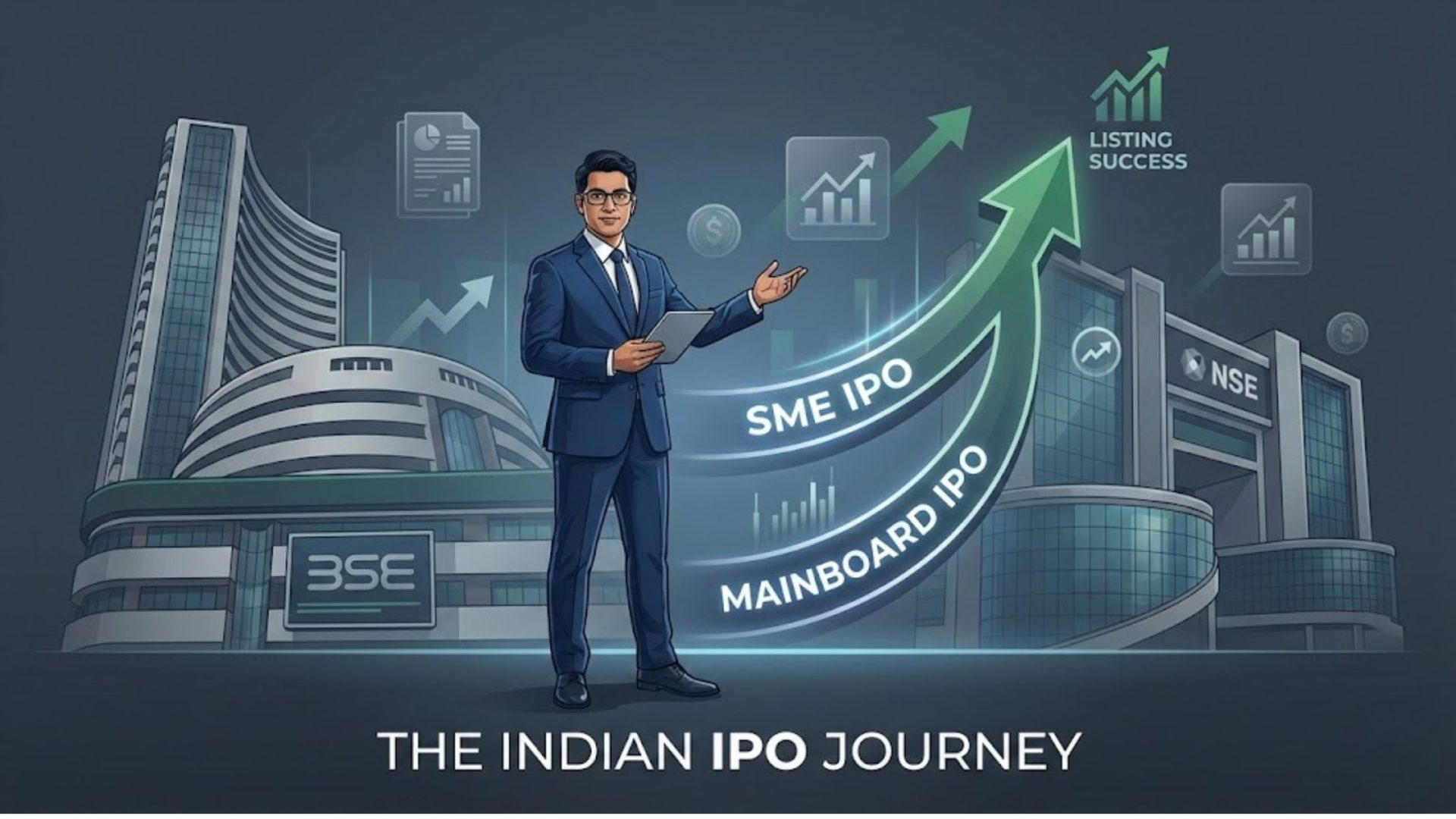
🚀 Going Public in 2026? Launch Your SME or Mainboard IPO the Right Way
Knowing how to launch an IPO in India is the first step toward one of the most transformative decisions a business can make. Whether you’re a fast-growing startup or an established enterprise, going public opens access to institutional capital, strengthens brand credibility, and creates long-term expansion opportunities. But a successful listing isn’t just about ambition — it demands regulatory clarity, the right documentation, and expert execution at every stage.
Every company’s IPO journey is different. Your business size, financial standing, and growth stage determine whether the SME IPO route or a Mainboard IPO is the right fit for you.
In this guide, we break down the complete IPO process in India — comparing SME and Mainboard routes, covering eligibility requirements, and showing how Inspirigence Advisors can help you launch your IPO confidently in 2026.
✅ What is an IPO?
An Initial Public Offering (IPO) is the process by which a private company lists its shares on a recognised stock exchange for the first time, making them available to the general public. This transition from private to publicly listed status gives the company access to a significantly broader investor base — including retail investors, high-net-worth individuals, mutual funds, and institutional investors — enabling it to raise substantial capital for growth, expansion, or debt reduction.
✅ What is an SME IPO?
An SME IPO is a listing mechanism specifically designed for Small and Medium Enterprises that have relatively smaller capital requirements. Companies in this category can list their shares on dedicated platforms — BSE SME or NSE Emerge — under a more accessible regulatory framework than a Mainboard IPO, making it a practical and faster route to public markets.
For startups and growing businesses seeking structured growth capital, the SME IPO route offers lighter compliance, lower costs, and quicker market entry. However, navigating the listing process still requires regulatory precision — which is where experienced SME IPO consultants like Inspirigence Advisors make a measurable difference, handling everything from documentation to exchange approvals.
✅ What is a Mainboard IPO?
A Mainboard IPO is designed for larger, well-established companies looking to raise significant capital on India’s primary stock exchanges — the BSE and NSE. Unlike the SME route, the Mainboard comes with stricter eligibility requirements, higher compliance obligations, and a much broader investor base — making it the preferred path for companies targeting institutional investors, mutual funds, and national-scale visibility.
To qualify for a Mainboard listing, companies must demonstrate consistent financial performance, strong governance, and full regulatory readiness. Given the complexity involved, partnering with experienced IPO consulting services ensures your business is aligned with SEBI norms, investor expectations, and exchange requirements at every stage — from DRHP drafting to final listing.
✅ SME IPO vs Mainboard IPO: Key Differences
| Feature | SME IPO | Mainboard IPO |
|---|---|---|
| Paid-Up Capital (Post Issue) | Up to ₹25 crores | More than ₹10 crores |
| Exchanges | BSE SME, NSE Emerge | BSE, NSE |
| Regulatory Norms | Relaxed SEBI guidelines | Stringent SEBI regulations |
| Investor Base Requirement | Minimum 50 investors | 1000+ investors (retail & institutional) |
| Track Record | Optional 3-year operational history | Typically, 3 years of profitability |
| Compliance & Reporting | Light reporting norms | Full SEBI & stock exchange compliance |
✅ Which IPO Route is Right for You?
Wondering whether to go for an SME or Mainboard IPO? Here’s a simple checklist:
Choose SME IPO if:
✅ Your company has post-issue capital up to ₹25 crores
✅ You want to raise smaller funds (₹2–25 crores)
✅ You’re a startup or MSME with future growth potential
✅ You’re looking for lighter compliance and quicker market entry
✅ You want expert help from SME IPO Consultants in Mumbai or pan-India
Choose Mainboard IPO if:
✅ Your paid-up capital is over ₹10 crores
✅ You have a 3-year track record of profitability
✅ You want access to institutional investors and large capital
✅ You’re aiming for national visibility and higher valuations
✅ You need support from an experienced IPO advisory team.
✅ Step-by-Step IPO Process in India
| Step | Description |
|---|---|
| 1. Appoint an Investment Bank or Underwriter | Hire a merchant banker or financial expert to help plan your IPO strategy. For SMEs, choose a partner with strong SME IPO advisory experience. |
| 2. Draft the Offer Document | Prepare a Draft Red Herring Prospectus (DRHP) or Red Herring Prospectus (RHP) as per SEBI norms. It includes financial statements, a business overview, and risk factors. |
| 3. SEBI and Exchange Approval | Submit the DRHP to SEBI and the respective stock exchange (BSE/NSE or BSE SME/NSE Emerge) for review and approval. |
| 4. Marketing via Roadshows | Create buzz among investors through roadshows, online forums, and investor meetings. |
| 5. IPO Pricing: Fixed or Book Building |
|
| 6. Opening & Closing of IPO Bidding | The IPO is open for subscription (typically 3–5 days). Investors place bids based on the lot size. |
| 7. Share Allotment | Based on demand, shares are allotted. In oversubscription cases, allotment is proportionate. |
| 8. Listing on the Exchange | After allotment, the company’s shares are listed on the stock exchange, and trading begins. |
✅ Importance of Due Diligence Before IPO
Before filing for an IPO, your company must undergo comprehensive due diligence to ensure transparency and compliance with SEBI norms. This process helps identify any gaps or risks that could delay approvals or affect investor trust.
Key areas covered in due diligence include:
-
Financial statement verification
-
Legal and tax compliance checks
-
Intellectual property and contract review
-
Corporate governance assessment
-
Risk disclosure validation
A reliable Due Diligence service provider like Inspirigence Advisors ensures your company is “IPO ready” — minimising regulatory hurdles and strengthening investor confidence.
✅ Eligibility Criteria
Before applying for an IPO, companies must meet specific eligibility norms set by SEBI and stock exchanges. These criteria ensure that only financially stable and compliant businesses can go public. Understanding IPO eligibility requirements early helps companies prepare the right documentation, strengthen governance, and avoid delays during listing. Inspirigence Advisors assists businesses in evaluating their IPO readiness and meeting all eligibility standards for both SME and Mainboard IPOs.
▶️ SME IPO Eligibility:
💰 Net tangible assets of at least ₹1 crore
🕒 Operating history of minimum 3 years (preferred)
👥 50+ investors required
🚫 No regulatory blacklisting
🧾 Securities must be in dematerialised form
🏦 Registered with a depository
If you’re planning an SME IPO, work with the right SME IPO consultants in Mumbai or any major city to ensure smooth compliance.
▶️ Mainboard IPO Eligibility:
💼 Paid-up capital of ₹10+ crores
📊 Post-issue market cap of ₹25+ crores
📅 3 years of profitability and audited financials
👥 Minimum number of allottees as per SEBI rules
🚫 No outstanding litigation or regulatory violations
To meet these conditions, seek guidance from firms offering the Best IPO consulting services in India.
✅ Types of IPO Offerings
📌 Fixed Price Offering
Investors know the exact share price before applying.
📌 Book Building Offering
A price band is declared, and investors bid within that range. The final price is decided after evaluating bids.
Both options are available for SME IPOs and Mainboard IPOs, depending on your funding goals.
✅ Why Choose Inspirigence Advisors?
Whether you’re launching an SME IPO or a Mainboard IPO, the support of experienced professionals can make all the difference.
👉 Inspirigence Advisors brings end-to-end expertise across every stage of the IPO journey, offering:
- Complete IPO readiness evaluation
- Regulatory filings & documentation
- DRHP & RHP drafting
- Investor roadshows & pricing strategy
- Exchange approvals
- SME & Mainboard IPO execution
“Whatever stage you’re at, Inspirigence Advisors is equipped to guide your IPO journey from start to finish.”
✅ Final Thoughts
Launching an IPO in 2026 is a strategic decision that requires careful planning, regulatory clarity, and expert execution. Whether you are evaluating an SME IPO or a Mainboard IPO, understanding the IPO process in India, eligibility criteria, compliance requirements, and cost implications is critical to long-term success. For startups and growing businesses, the SME IPO route offers faster market access and lighter compliance, while established companies may benefit from the scale and visibility of a Mainboard IPO listing.
However, navigating SEBI regulations, IPO documentation, due diligence, and investor engagement without professional support can lead to delays and valuation risks. This is where working with experienced IPO advisory services in India and trusted SME IPO consultants becomes essential. The right advisory partner ensures IPO readiness, regulatory compliance, accurate DRHP filing, and a smooth listing on platforms such as BSE SME, NSE Emerge, BSE, or NSE.
Inspirigence Advisors supports businesses at every stage of going public — from SME IPO planning and Mainboard consulting to IPO readiness assessment and post-listing compliance. With a structured, compliance-first approach and deep market understanding, Inspirigence helps companies minimize risk, maximize valuation, and build long-term investor confidence.
📞 Planning an SME IPO or Mainboard IPO in 2026?
Contact Inspirigence Advisors – the Best IPO advisory service in India for SME and Mainboard IPOs.
✅ FAQs – Frequently Asked Questions
Q1: What is the minimum capital requirement for an SME IPO in India?
Ans. To launch an SME IPO in India, a company must have a minimum net tangible asset of ₹1 crore and a post-issue paid-up capital not exceeding ₹25 crore. Additionally, the company should have a sound business model, clear financial records, and at least 50 investors at the time of listing. Platforms like BSE SME and NSE Emerge cater to such small and medium enterprises looking to raise funds efficiently. Inspirigence Advisors assists businesses in evaluating these requirements through their IPO readiness and due diligence services.
Q2: Can startups apply for an IPO in India?
Ans. Yes, startups can go public through the SME IPO route if they meet the eligibility criteria. Many early-stage companies now prefer SME IPOs as they offer relaxed SEBI norms, lower costs, and faster listing timelines. With proper pre-IPO preparation, financial due diligence, and IPO advisory, even young ventures can access public funding. Inspirigence Advisors provides IPO consulting for startups, helping them prepare financial documents, file DRHPs, and ensure compliance with SEBI and exchange regulations.
Q3: What is the difference between an SME IPO and a Mainboard IPO?
Ans. The SME IPO is ideal for small and medium enterprises looking to raise smaller amounts (₹2–25 crore) and list on BSE SME or NSE Emerge with easier compliance. In contrast, Mainboard IPOs are for larger, well-established companies with a paid-up capital exceeding ₹10 crores and a market capitalisation of ₹25 crores or more. Mainboard listings attract institutional investors, mutual funds, and retail participation on major stock exchanges, such as the BSE and NSE. Inspirigence Advisors helps companies choose the right IPO path — SME or Mainboard — based on their financial readiness, compliance level, and growth goals.
Q4: What is IPO Due Diligence, and why is it important?
Ans. IPO due diligence is the process of thoroughly assessing a company’s financial, legal, and operational records before it goes public. It helps identify compliance gaps, potential risks, and ensures that all disclosures in the Draft Red Herring Prospectus (DRHP) are accurate and transparent. SEBI and stock exchanges require complete due diligence for investor protection and fair market practices. By conducting a detailed IPO due diligence review, Inspirigence Advisors ensures your company is IPO-ready, compliant, and confident during SEBI and exchange evaluations.
Q5: What are the main documents required for an IPO in India?
Ans. To launch an IPO, companies must prepare several regulatory documents, including:
-
Draft Red Herring Prospectus (DRHP)
-
Audited financial statements (last 3 years)
-
Legal and tax compliance reports
-
Corporate governance documents
-
Due diligence certificates from Merchant Bankers
-
Shareholding pattern and promoter details
Professional IPO documentation services offered by Inspirigence Advisors ensure that all filings meet SEBI and exchange standards, minimising the risk of delays or rejections.
Q6: What is the typical IPO timeline in India?
Ans. The IPO process in India usually takes 4–6 months from initial preparation to listing. This includes due diligence, document drafting (DRHP/RHP), SEBI and exchange approval, marketing through investor roadshows, pricing, bidding, and final allotment. For SME IPOs, the timeline can be slightly shorter (3–4 months) due to simplified regulations. Engaging a professional IPO consulting firm like Inspirigence Advisors ensures each stage is completed efficiently and in compliance with SEBI guidelines.
Q7: What is an IPO Readiness Assessment, and why does it matter?
Ans. An IPO readiness assessment helps companies evaluate their financial health, internal controls, governance structure, and compliance level before applying for an IPO. It ensures the company meets SEBI eligibility norms and reduces the risk of rejection during the review process. Inspirigence Advisors conducts detailed IPO readiness and due diligence audits to identify gaps and prepare businesses for a successful IPO launch — whether on BSE SME, NSE Emerge, or the Mainboard.
Q8: How can Inspirigence Advisors help in launching an IPO?
Ans. Inspirigence Advisors offers complete IPO advisory and consulting services, covering every step from due diligence and readiness evaluation to document preparation, pricing strategy, investor roadshows, and exchange approvals. Their team assists startups, SMEs, and large enterprises across India — including Mumbai, Delhi, Pune, Ahmedabad, and Chennai — to navigate the IPO journey confidently. Whether it’s an SME IPO or a Mainboard listing, Inspirigence ensures compliance, efficiency, and strategic success.
📚 Related Reads
Deepen your IPO knowledge with these expert guides
|
📋
IPO Basics What is an IPO? Complete Guide to Initial Public OfferingsUnderstand the fundamentals of an IPO — types, process, benefits, and what going public means for your business. |
🏢
SME IPO SME IPO Process in India: Step-by-Step for Small BusinessesA detailed walkthrough of the SME IPO listing process — eligibility, documentation, BSE SME & NSE Emerge requirements. |
📁
Pre-IPO Prep Pre-IPO Documentation: What Your Company Must PrepareFrom DRHP drafting to compliance checklists — everything you need to prepare before filing your IPO application. |
Recent Posts

Due Diligence for NBFCs in India: Process, Checklist and Red Flags
Published on 10/8/2026

Investment Banking Advisory for Healthcare and Pharma Companies
Published on 10/5/2026

Investment Banking Advisory for NBFCs and Fintech Companies
Published on 10/5/2026

Due Diligence for Venture Capital Funds: Process and Checklist
Published on 10/5/2026

Due Diligence for Private Equity Firms in India: Process, Types and Checklist
Published on 10/5/2026

How to Find the Right Investment Banking Advisor in India: 7 Things to Check Before You Hire
Published on 9/15/2026